Two years can change a lot in an athlete’s life. For someone who regularly plays football, that time away from the pitch can mean losing not only physical conditioning, but also the familiarity and confidence that come with playing the sport.
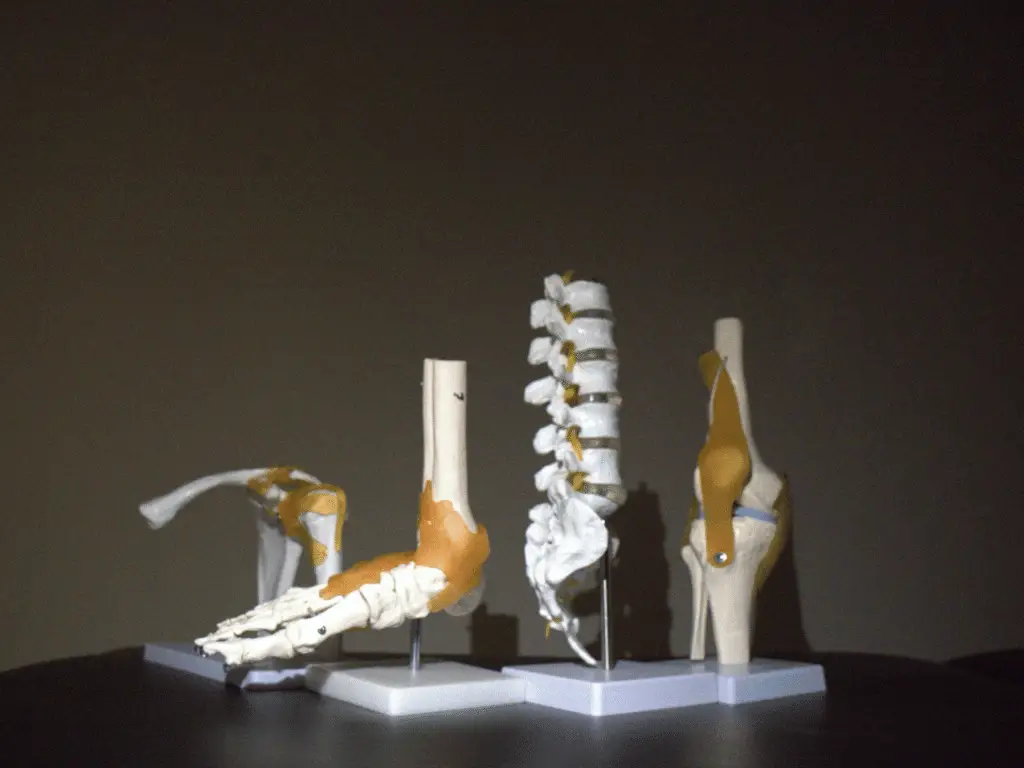
For Shazwan Faizal, a football and futsal enthusiast in his 30s, that absence followed a serious injury to his left knee. Injured during a tackle by an opposing player, he sustained a Grade 3 anterior cruciate ligament (ACL) injury that required surgery. Although the operation had taken place approximately two years earlier, Shazwan had not undergone a structured rehabilitation programme during the intervening period.
When he arrived at Physio Arena in March 2026, his goal was to return to football. However, his left leg remained noticeably weaker than his right, knee movement was still restricted, and the confidence needed to play again had yet to return. Working with Hakim and Zul, Shazwan began a progressive rehabilitation programme that would take him from foundational exercises to football-specific movement, field training and eventually competitive participation.
By October 2026, he would be back on the pitch in a corporate football tournament. Reaching that point, however, required rebuilding both his physical capacity and his confidence in using the injured leg.
Two Years Away From Football
Shazwan’s injury occurred during a football match when he was tackled by an opponent. The resulting ACL injury affected his left knee and was classified as Grade 3, indicating a complete ligament tear. Following surgery, he spent approximately two years without structured rehabilitation and did not return to playing football during that period.
By the time he sought help at Physio Arena, the effects of that prolonged absence were apparent. His left leg had become noticeably weaker, with visible muscular asymmetry compared with the right. Initial assessments also identified reduced lower-limb strength and a persistent limitation in knee extension. Shazwan had not regained full knee extension to 0 degrees, despite approximately two years having passed since surgery.
These findings were significant because football demands much more than the ability to walk or perform basic daily activities. Running, landing, accelerating and changing direction require strength, movement control and the capacity to tolerate repeated physical loading. For Shazwan, those abilities needed to be developed progressively before he could safely approach more demanding football-related activities.
Building a Plan Around the Starting Point
Hakim and Zul approached Shazwan’s rehabilitation by first addressing the physical limitations identified during his assessment. The programme was organised around restoring fundamental movement, rebuilding strength and gradually developing the capacity needed for sport. Rather than introducing demanding football drills immediately, the initial emphasis was placed on preparing his knee and lower limbs for progressive exercise.
The process also needed to account for Shazwan’s confidence. He understood that his left leg was weaker, and after two years away from football, returning to the pitch remained a significant personal challenge. The rehabilitation plan therefore needed to support both his physical development and his gradual reintroduction to the movements associated with the game.
Rebuilding the Foundations
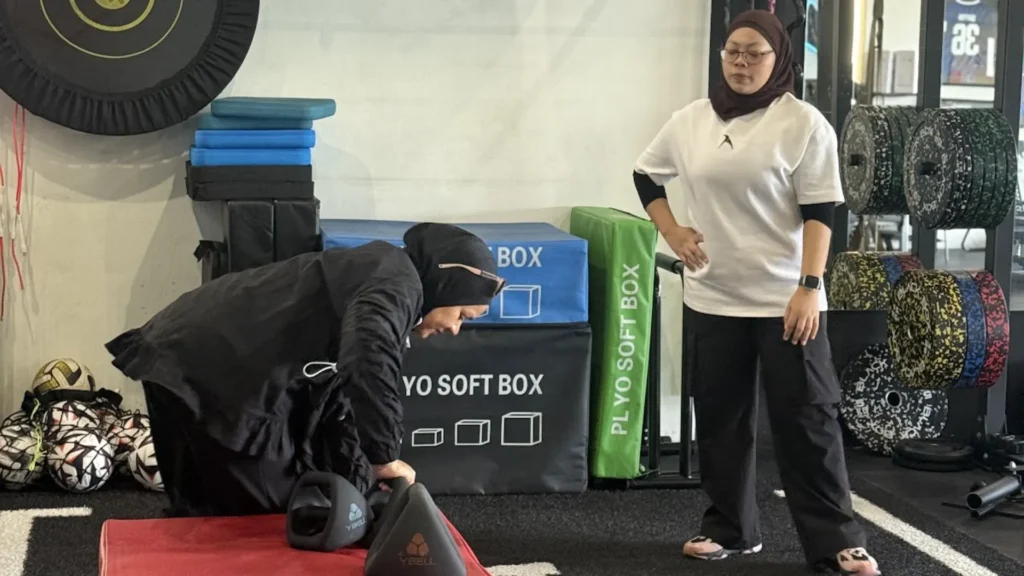
From March through approximately May 2026, Shazwan’s programme concentrated on restoring movement capacity, strength, balance and muscular endurance. Training began with controlled exercises, including isometric work, body-weight movements and low-load strengthening. Fundamental movement patterns such as squats were introduced and progressed according to his ability and response to training.
The early programme emphasised bilateral strengthening, allowing Shazwan to work through basic movement patterns while distributing load across both legs. This provided a foundation for rebuilding lower-body strength without immediately placing the full demands of an exercise on the previously injured side. As his capacity developed, the programme gradually introduced more challenging variations and greater resistance.
Addressing the Difference Between Both Legs
One of the main rehabilitation priorities was the difference in strength and muscle development between Shazwan’s left and right legs. The prolonged period without structured rehabilitation had left him with noticeable asymmetry, making progressive strengthening particularly important. Zul incorporated unilateral exercises that challenged each leg more independently, including staggered-stance patterns and single-leg strength work.
These exercises allowed the programme to place greater emphasis on the affected leg while progressively developing stability, control and force production. Unilateral strengthening became an important part of addressing Shazwan’s lower-limb imbalance, preparing him for the more demanding movements that would follow.
Progressive overload remained central throughout this stage. Exercise resistance, complexity and overall demands were increased as Shazwan demonstrated improvements in his ability to perform the movements. By establishing a stronger physical foundation, the programme could begin progressing towards the explosive activities associated with football.
Preparing for the Demands of Football
By approximately May and June 2026, Shazwan’s rehabilitation had progressed beyond fundamental strengthening. The focus expanded towards developing greater muscular strength, power and physical capacity. Resistance exercises became progressively more demanding, with some training eventually approaching approximately 80 to 90 percent of his maximum training load.
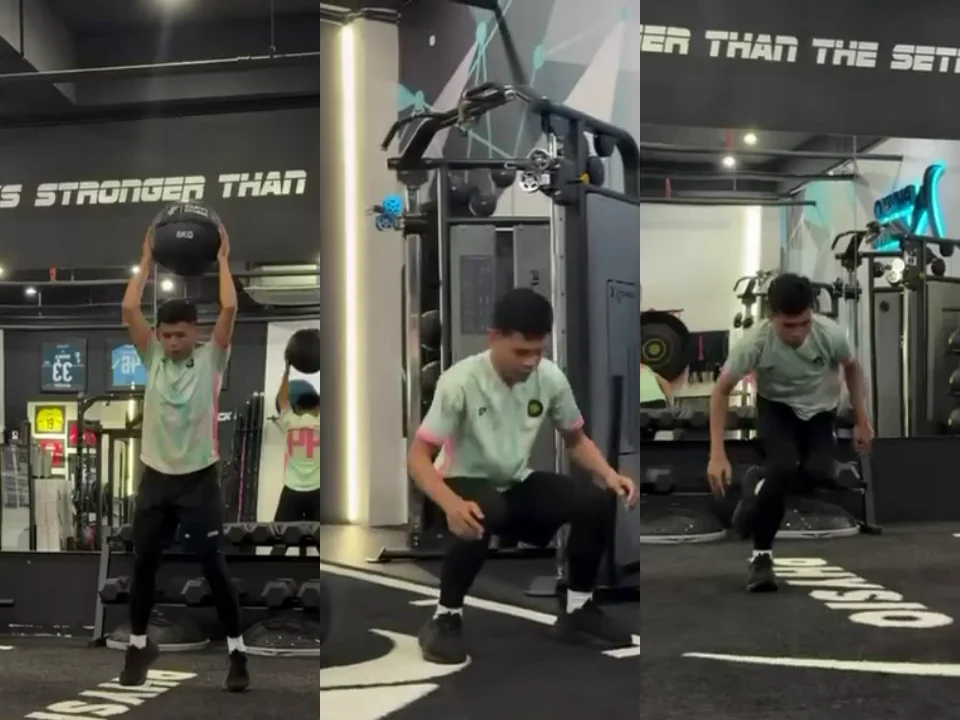
Low-impact plyometric exercises were introduced alongside continued bilateral and unilateral strengthening. These activities began developing the ability to produce and absorb force during more dynamic movement, an important consideration for football players who must repeatedly accelerate, decelerate, land and change direction.
For Shazwan, this stage marked the transition from rebuilding basic physical capacity towards preparing for the specific demands of his sport. The programme still included foundational strengthening, but exercises increasingly required greater coordination, movement control and power.
From Strength Training to Football Movements
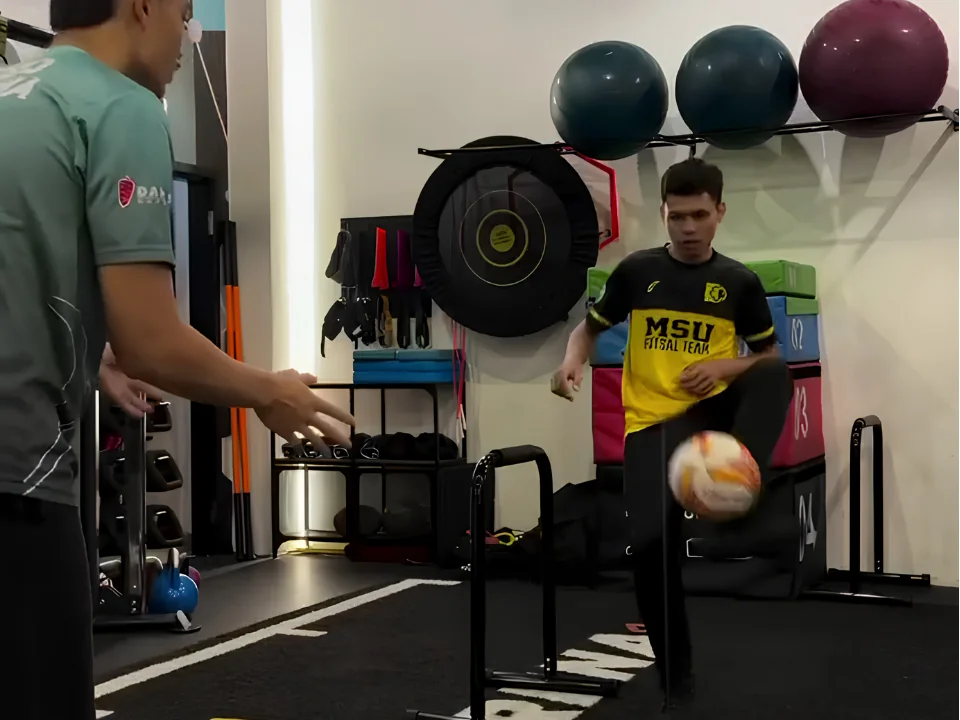
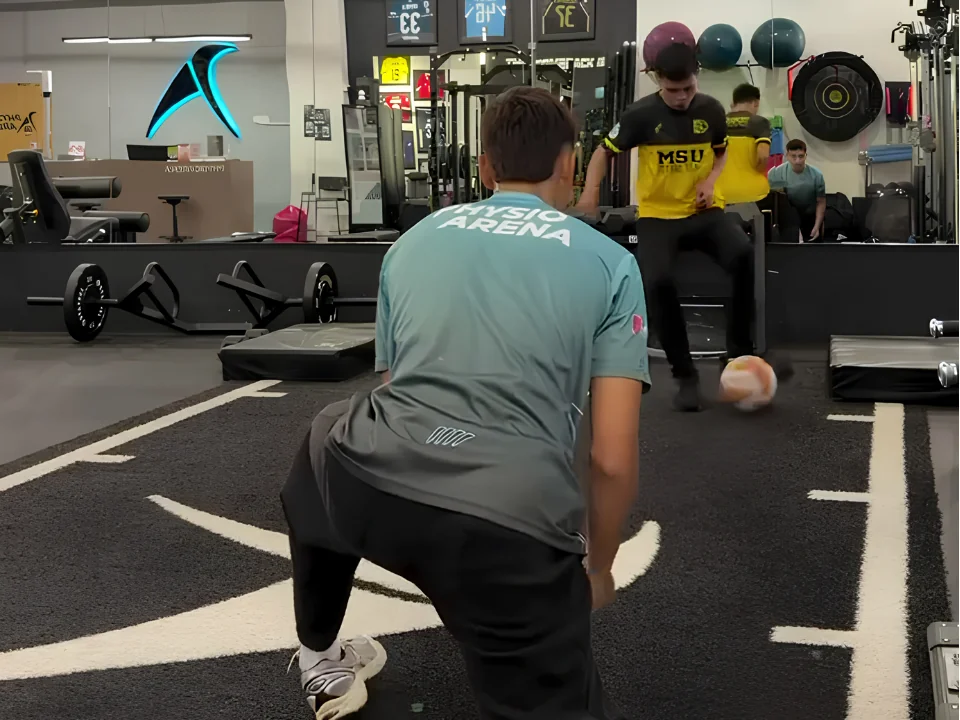
As his physical abilities developed, Zul introduced more functional exercises that required coordination between upper- and lower-body movements. Agility work was progressively incorporated, followed by introductory football activities performed in a controlled indoor environment.
These early drills included basic passing, ball touches and movements that gradually reintroduced familiar football actions. Rather than returning immediately to unrestricted play, Shazwan could begin practising sport-related movements within a progressive training environment. The exercises created opportunities to apply his developing strength and coordination to activities that resembled the demands of football.
The programme was no longer focused solely on rebuilding the injured leg. It was preparing Shazwan to use that strength in football-specific situations.
Taking Rehabilitation Onto the Field
As Shazwan’s capacity improved, training expanded beyond the gym and onto the football field. The programme incorporated agility drills, change-of-direction exercises, football-specific plyometrics, running patterns, shooting, dribbling and ball control. The intensity and complexity of these activities increased progressively as he became more capable of handling the demands.
Field-based training provided a different challenge from controlled strength exercises. Football involves unpredictable movement, repeated changes of direction and the need to coordinate physical actions while responding to the ball and other players. Although structured drills cannot reproduce every demand of a competitive match, they offered a practical progression towards more realistic sporting activities.
During this period, Shazwan also began returning to social football at a reduced intensity. This was an important milestone, but physical participation did not immediately mean he felt completely confident in his knee.
Beyond Physical Readiness
From June through September 2026, Shazwan’s programme continued progressing towards more demanding football activities. Strength training remained part of his routine, while greater emphasis was placed on speed, agility, change-of-direction ability and power. Higher-impact plyometric exercises were introduced as his capacity developed, with training loads and movement intensity increased progressively.
Assessments during this period suggested that Shazwan had developed sufficient physical capacity to begin more demanding field-based training. However, the treating team’s observations also highlighted another important consideration: he had not yet regained full confidence in returning to football.
After two years away from the sport, performing controlled exercises successfully was different from trusting his leg during a match. Football requires players to commit to rapid movements, react to changing situations and make decisions without consciously analysing every step. For Shazwan, rebuilding confidence in those actions became an important part of the later rehabilitation stages.
Rebuilding Confidence Through Movement
Hakim and Zul continued developing Shazwan’s programme with exercises that progressively challenged both his physical abilities and his willingness to perform demanding football movements. The emphasis was not simply on increasing exercise difficulty, but on giving him opportunities to practise the movements he had been hesitant to perform.
Throughout September, the programme included activities intended to challenge his confidence while continuing to build speed, strength, agility and control. The fundamental exercises remained part of his training, but their intensity and loading progressed alongside more demanding sport-specific tasks.
This was a defining aspect of Shazwan’s rehabilitation. His physical capabilities had improved, but confidence needed to develop alongside them. The later stages of training therefore connected physical preparation with repeated exposure to movements relevant to his return to football.
By early October 2026, Shazwan’s confidence had improved considerably. He was participating in social football approximately once or twice a week at a manageable intensity, applying the movement skills and physical capacity developed during rehabilitation. Although these sessions were not equivalent to unrestricted high-intensity competition, they represented meaningful progress after his prolonged absence.
The Return to the Pitch
In October 2026, approximately seven months after beginning rehabilitation at Physio Arena, Shazwan reached a significant personal milestone. He participated in the Serumpun Cup, a corporate football tournament involving Malaysian and Indonesian teams. Playing in his main position as a defensive midfielder, he returned to a competitive football environment after spending two years away from the sport.
His team went on to win the tournament.
For Shazwan, that experience represented more than a competition result. It marked the return to an activity he had wanted to resume since his injury and surgery. The journey had begun with noticeable left-leg weakness, incomplete knee extension and limited confidence, before progressing through foundational strengthening, unilateral exercises, plyometrics, agility and football-specific preparation.
The tournament provided a meaningful conclusion to the rehabilitation programme he had started in March. However, participation and team success should not be interpreted as evidence that every clinical return-to-sport criterion had necessarily been achieved. Those assessments require their own documented findings.
Completing the Rehabilitation Programme
Shazwan completed his programme at Physio Arena in October 2026. Over approximately seven months, his training had progressed from controlled rehabilitation exercises to increasingly demanding football-specific movements and competitive participation.
Hakim’s involvement in assessment and rehabilitation planning, alongside Zul’s progressive strength and football-specific training, supported different aspects of that development. Their work reflected the importance of matching exercise demands to the individual’s starting point, physical progression and sporting goals rather than relying on the amount of time that had passed since surgery alone.
The experience also demonstrated that returning to sport involves more than rebuilding muscle strength. For Shazwan, the later stages of rehabilitation needed to address his confidence in movement, particularly when performing the more demanding activities associated with football.
More Than a Return to Football
Shazwan’s journey illustrates how rehabilitation can remain relevant even when a considerable amount of time has passed since an operation. Approximately two years after ACL surgery, he still presented with important limitations in knee movement, lower-limb strength and confidence. These findings shaped a programme that began with fundamental rehabilitation before progressing into strength development, power, agility and football-specific preparation.
At Physio Arena in Bukit Jelutong, Shah Alam, his experience brought together progressive rehabilitation and performance-oriented training. Hakim and Zul contributed to different stages of the process, with the programme evolving from rebuilding physical capacity to preparing Shazwan for the movements and demands of football.
His return to social football and subsequent participation in the Serumpun Cup represented meaningful milestones in that progression. More importantly, the journey reflected the value of addressing both physical limitations and confidence when preparing an individual to return to a sport they enjoy.
For Shazwan, the outcome was personal and tangible. After two years away from football, he was back on the pitch, playing in his familiar midfield position and contributing to a tournament-winning team.
His story is a reminder that returning to sport is not determined by time alone, but by the physical preparation, progressive movement exposure and individual readiness developed throughout rehabilitation.
This Case File documents one individual’s rehabilitation experience. Recovery timelines, physical readiness and return-to-sport outcomes vary between individuals. Participation in football should not be interpreted as formal medical clearance or proof that every clinical return-to-sport criterion was achieved.
WORTH SHARING?
Pass this story along.